

Babar Azam, the fall guy in Pakistan cricket's carousel of chaos
For decades, Pakistan survived on raw talent, divine chaos and the occasional act of genius. In 2026, in the age of uber-professionalisation, that is no longer sufficient.


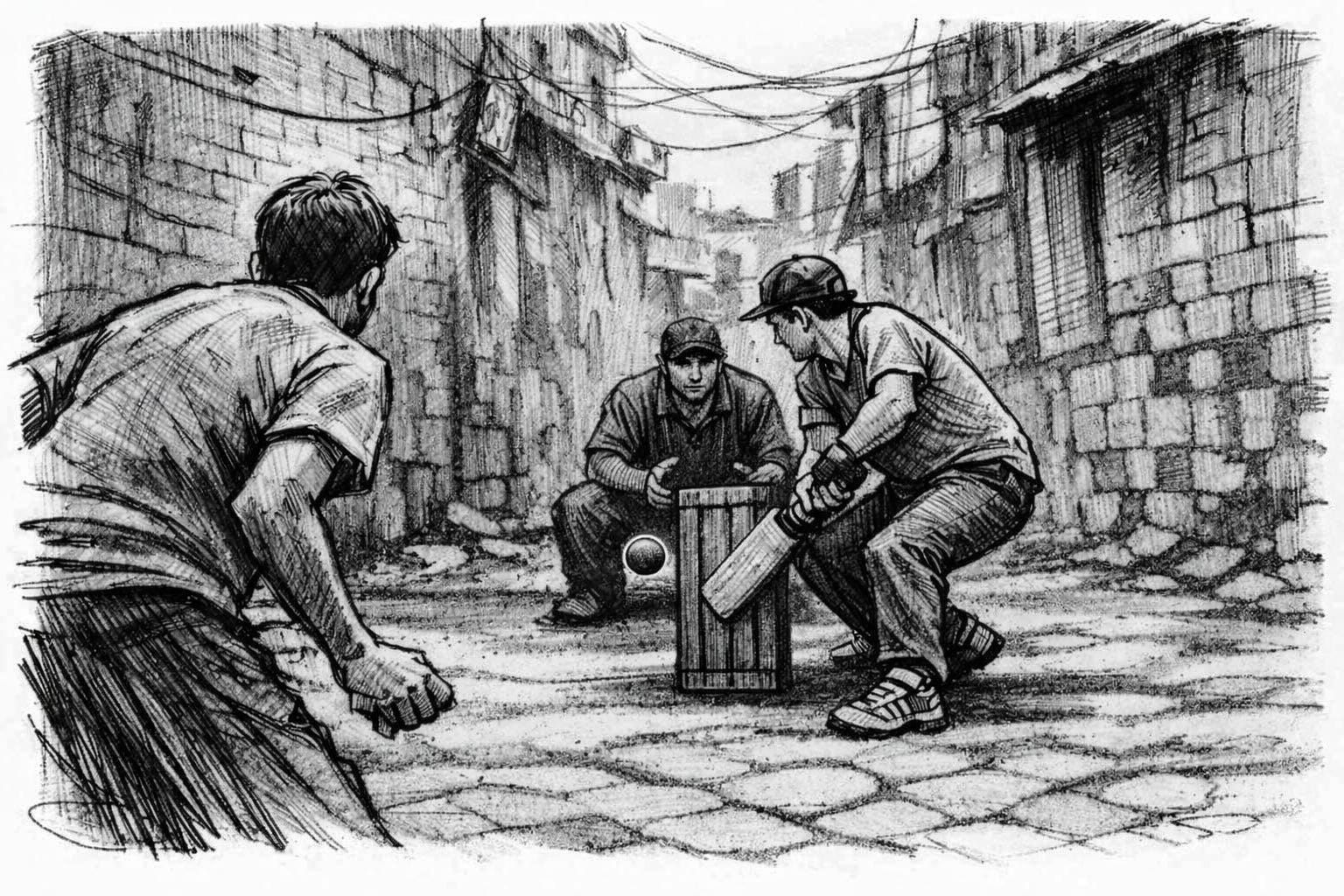
Somewhere in Pakistan, right now, a 12-year-old boy is bowling a tape ball to his friends. The street is narrow, the stumps improvised, and the fielders are too close for comfort. The scene is, in equal parts, charming and chaotic. The boy bowls fast because he was born to bowl fast. After all, in Pakistan, fast bowling is not a career choice but a calling.
The child does not know it yet, but he is the heir to a lineage that has sustained through decades; through Imran Khan, Wasim Akram, Waqar Younis, and Shoaib Akhtar, through the valleys of Khyber Pakhtunkhwa and the streets of Lahore. The talent pipeline is not the problem. It never has been.
And yet. Pakistan currently languish at the foot of the World Test Championship table, with a measly one win from four matches. They have lost 12 of 16 Tests under the much-maligned Shan Masood, including a seven-match losing streak. Their solution to arresting the spiral? Rewind the clock and reappoint the captain they removed two and a half years ago because, as Aaqib Javed put it with unintentional candour: “There were many discussions. The selection committee made only one recommendation. That was Babar Azam. That’s it.”
That the national selectors feel they were left with a Hobson’s choice exposes the scale of the problem currently facing Pakistani cricket.
THE BABAR AZAM QUANDARY
Babar is one of the most polarising players of the modern era. At his best, the right-hander is a supremely elegant technician, capable of making the fastest bowlers in the world look positively pedestrian. Babar has nine Test centuries and a career average of over 42. Not eye-popping numbers by any means, but nothing to be sniffed at, either. Perhaps more pertinently, though, he scored four of those centuries as captain and averaged an impressive 50.79 during his first stint in charge.
In his early captaincy years, Babar represented something genuinely exciting about Pakistani cricket: young, technically refined, and capable of matching the world’s best players. He won away clean sweeps in Bangladesh and Sri Lanka. He is, in Danyal Rasool’s precise phrase, the player Pakistan cricket had to return to because he was “the best option when it needed somewhere to turn”.
But the same Rasool who acknowledges Babar’s value also delivers an honest appraisal of his limitations. “At 31,” he writes, “there is also the weary recognition, based on a decade’s sample size, that Babar isn’t quite as gifted at constantly adapting and improving as might have been true of a player of his calibre.”
His Test average since the start of 2024 has dropped to 28.72, against a career mark of 42.67. He has not scored a Test century since December 2022. His reading of the game as captain was widely criticised, particularly his use of spin bowlers, and his field placings often appeared unimaginative. And after England completed a 3-0 home whitewash of Pakistan, Babar argued that Pakistan had dominated each match.
Babar is not a long-term antidote to the ever-increasing ills of Pakistani cricket. This is, as Rasool puts it exactly, “a machine being switched off and on again, and hoping it gets back to a semblance of usability”.
WHAT THE MASOOD TENURE REVEALED
Now, it should be stressed that Shan Masood’s 12 defeats in 16 Tests are not solely his fault. The phlegmatic left-hander inherited a bonfire, to be blunt, but his tenure has only added fuel to the flames. The 3-0 whitewash in Australia. The historic 2-0 home defeat to Bangladesh. A seven-match losing streak that equalled the longest in their history. The only win came against England at home, 2-1, a result that revealed as much about England’s dysfunction as about Pakistan’s competence.
What Masood’s leadership also revealed is not that he was the wrong captain but that the problems were being misdiagnosed. The bowling attack that had briefly made Pakistan one of the most exciting teams in world cricket — Shaheen Shah Afridi and Naseem Shah, two genuinely zippy and skilful young bowlers — had been mismanaged to the point of mediocrity.
Shaheen, now 26, appears to be a bowler in terminal decline when he ought to be nearing his peak. Not because his raw talent has deserted him, but because his workload was horribly mismanaged across formats and his recovery from knee surgery was never properly supervised. The pace that made him terrifying has been diminished by an administrative machine that treats diamonds like scraps of metal.
THE INSTITUTIONAL CHAOS
The PCB has had multiple chairmen in the last four years. Selection committees have been assembled and then dissolved at head-spinning speed. Captains have been appointed, removed and reappointed. The format-separation policy — three different captains for three different formats — was introduced as a structural innovation and has only added to the chaos. In fact, Pakistan cricket has had more captains in the last three years than in the previous decade.
The NCA camp, conducted in the blistering Lahore heat in June, was presented as evidence of forward planning. It was, in fact, evidence of emergency remediation. Babar himself acknowledged what the camp exposed. “What I have realised over the years,” he reflected, “is that we have been lacking a bit in fitness in Test cricket, because of which we did not have impactful performances with the bat or ball.” Over the years. Not this season. Not since the Bangladesh defeat. Over the years. The rot is deeply embedded in the team’s culture, but remarkably, the realisation has arrived only now, weeks before a back-to-back away tour of the West Indies and England.


Misbah-ul-Haq, the former captain and now a member of the selection committee, recently addressed the never-ending turmoil. “The board and the selection committee don’t want regular changes, but sometimes the results are such that they make them necessary,” he said. The issue is that the PCB creates the conditions for poor results. The poor results force changes. The changes create new conditions for poor results. The carousel keeps turning with players jumping on and being hurled off at regular intervals.
THE TALENT BEING SQUANDERED
Shaheen Shah Afridi is still just 26 years old. He should be in the peak years of a generational fast-bowling career. Instead, his international future feels murky, at best. The former captain has been dropped more times than a hot potato since his career-threatening knee injury in 2022, and he now finds himself, once again, on the outside looking in. Aaqib Javed’s verdict: “Shaheen is an excellent bowler, but at times you have to pick which format you want to play.” At just 26, Shaheen should not have to make that choice. A properly managed programme makes it for him, protecting his body and his career longevity. Pakistan cricket has failed Shaheen; Shaheen has not failed Pakistan cricket.
Naseem Shah, he of the most picture-perfect action in world cricket, has been mucked around by the selectors, too. And while he once felt like the obvious successor to the likes of Wasim, Waqar and Shoaib, Naseem is now fighting for his own international future. Frankly, the list of Pakistani talents who have been mismanaged, burned out or lost to the system is long enough to constitute an indictment in itself.
In 2026, every elite cricket programme invests in sports science, data analytics, biomechanical analysis, sports psychology, nutrition and recovery protocols. Australia’s sustained success is built on precisely these foundations. India’s dominance compounds them. The chasm between what Pakistan cricket is and what it needs to become is not a talent gap. It is a gap in everything that surrounds talent.
WHAT NEEDS TO CHANGE
Pakistan needs what every successful cricket programme has built: a coherent player pathway from domestic cricket to international cricket, with consistent selection criteria and genuine performance accountability. The domestic pipeline is not empty, far from it, but the bridge between domestic and international cricket is fractured.
Pakistan needs a long-term coaching and conditioning philosophy rather than the reactive changes that have defined the last four years. It needs to protect its fastest bowlers the way Australia protects its pace assets, managing workloads across formats and investing in rehabilitation as seriously as in selection. Most importantly, perhaps, it needs forward-thinking administrators whose tenure is long enough to implement a strategy.
THE HOPE THAT IS NOT A PLAN
Babar will captain Pakistan in the West Indies later this month. He will try his best. He may even succeed, who knows? The raw material has not disappeared. Pakistan is still the country where a young fast bowler hurls a tape ball in the morning and dreams of bowling for his country under lights at night. That culture cannot be contrived. It is Pakistan’s greatest cricket asset, and it has survived every administrative failure so far.
But in 2026, culture is a non-negotiable. The talent that sustained Pakistan through decades of institutional dysfunction is no longer enough to mask the gap between what their programme is and what their rivals have built. India have talent and infrastructure. Australia have talent and infrastructure. Pakistan have talent and chaos. That’s it.
The machine has been switched off and on again. Pakistan are hoping it returns to a semblance of usability. That hope is not a plan. But for now, it is all they have.
Related Posts
ODI cricket is dying a slow, agonising death
How ‘hit-and-giggle’ cricket became a multi-billion dollar business
Reader, if you seek Brendon McCullum’s monument, look around you
I am an Indian in Mumbai but have always been fascinated by the mercurial brilliance and dismal lows of Pakistani cricket . There were few better sights in cricket than watching the sheer languid ease of Zaheer Abbas , the one day magical genius of Saeed Anwar or the mastery of reverse swing of Waqar and Wasim . Not to forget the majestic batting of Majid , the cheeky ubullience of Asif Iqbal , the fearless hitting of Wasim Raja , Javed’s ability to compete with and conquer the world’s best bowlers with his uniquely gifted batsmanship . And of course the all round magnificence and superb captaincy of Imran !
When I first watched Babar on TV playing for Pakistan in the UAE , I thought this guy is every bit as good as any great batsman in the world .
But such is the nature of the travails one is subjected to in the Pakistani cricket environment that it came as no surprise that his batting literally fell off a cliff at a relatively young age of 27 or 28 !
Pakistan cricket in the 21st century has produced cricketing diamonds but the chaotic toxicity of its environment turns them into spent charcoal very quickly .